§ Research
Electrostatic embedding scheme for ML/MM potentials
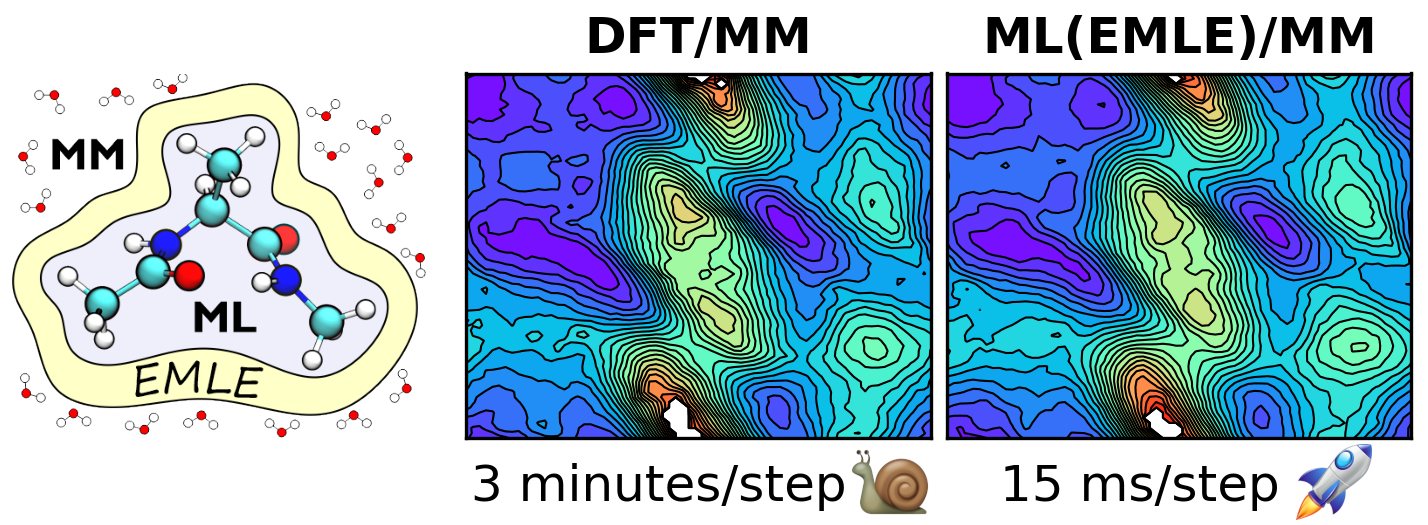
The project focuses on integrating machine-learned potentials into hybrid QM/MM simulations via the electrostatic machine learning embedding (EMLE) approach.
By decoupling the in-vacuo energy prediction from the environmental polarization effects using physics-based models for electronic density, charge equilibration, and atomic polarizabilities, the project enables accurate ML potentials to be employed in complex molecular simulations. This framework improves the accuracy of energy and force predictions for ground- and excited-state processes and facilitates seamless incorporation into existing QM/MM software, as demonstrated in applications ranging from small-molecule systems to biomolecular environments. The project led to the development of the emle-engine package, a flexible open-source tool that implements the ML/MM electrostatic embedding scheme for efficient multiscale molecular dynamics simulations.
Conformational equilibrium of perylenediimide aggregates
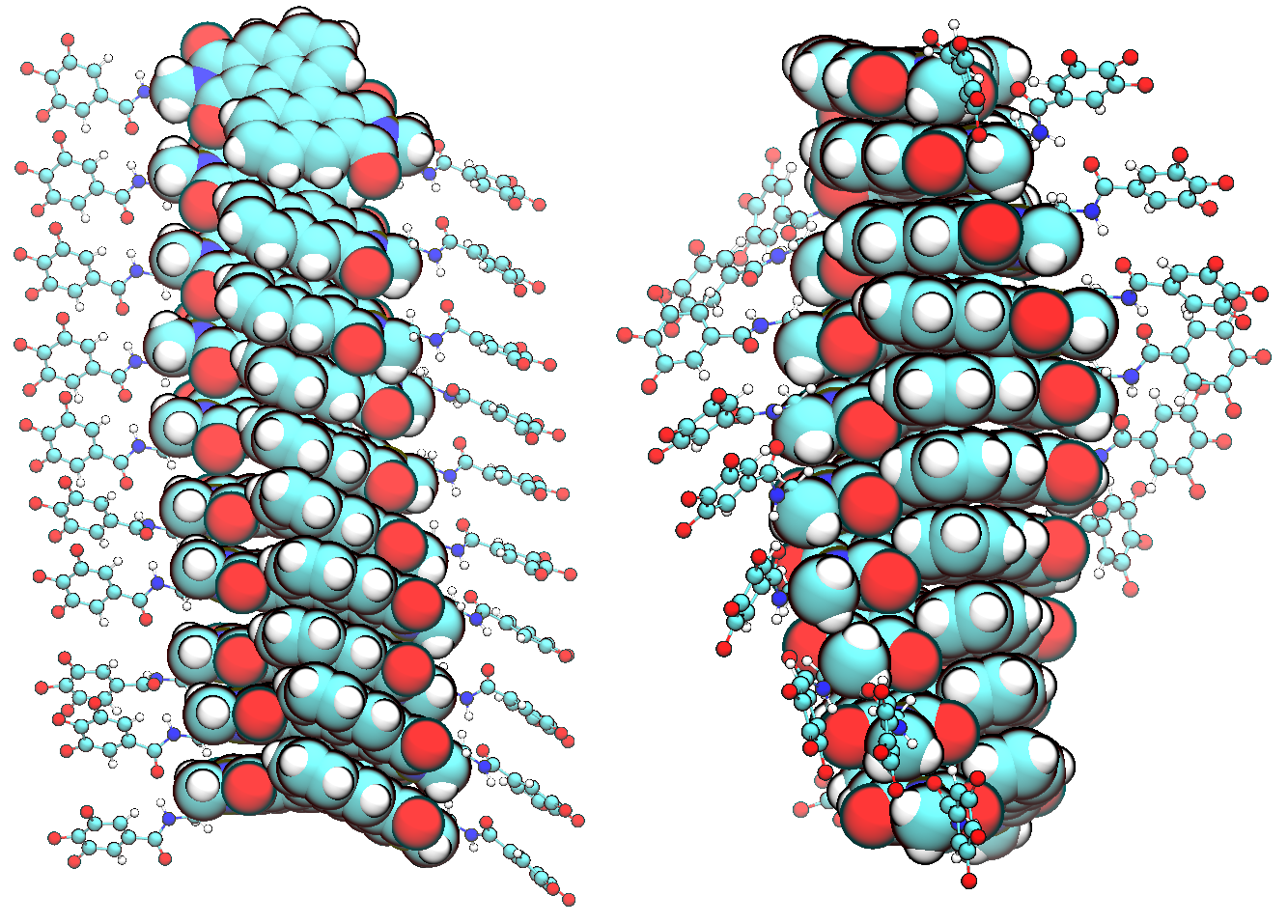
Perylenediimides (PDIs) form supramolecular aggregates with tunable optical and electronic properties, but their conformational equilibrium is notoriously diffi cult to capture with standard force fields due to the delicate balance between π -stacking, hydrogen bonding, and intramolecular flexibility. In collaboration wi th the group of Juan Aragó (IcMol, UV), we are developing a transferable force f ield for Z-PDI aggregates using the Espaloma framework and validating it against experimental conformational preferences using enhanced sampling MD simulations.
Adaptive String Method
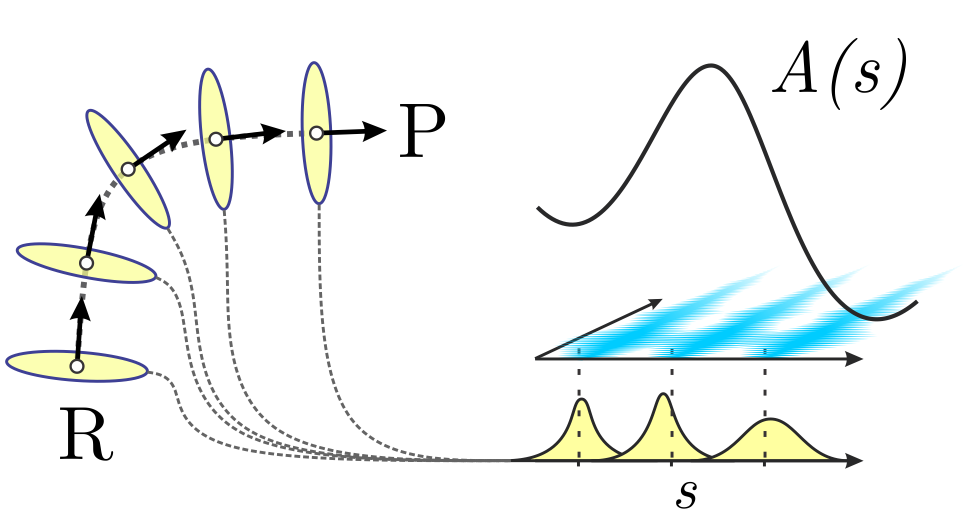
Adaptive String Method (ASM) locates the minimum free energy path (MFEP) between two local minima (typically reactants and products of a complex chemical reaction) in arbitrary collective-variable spaces. ASM self-adjusts to achieve rapid convergence and enables the calculation of free energy profiles using the path collective variable defined along the MFEP. The method is maintained as part of Amber suite (ambermd.org) and is actively developed and applied to numerous processes in condensed phases, with focus on enzymatic reactivity.